- 15 Member Companies Conduct Bipartisan Outreach for Science-Based, Timely Chemical Management Program Changes
- TSCA Improvements Would Streamline Innovation and Bring Safer, More Sustainable Chemistries to Market ACI Says
Members of the American Cleaning Institute (ACI) advocated late last week for proposed legislation to amend the Toxic Substances Control Act (TSCA).
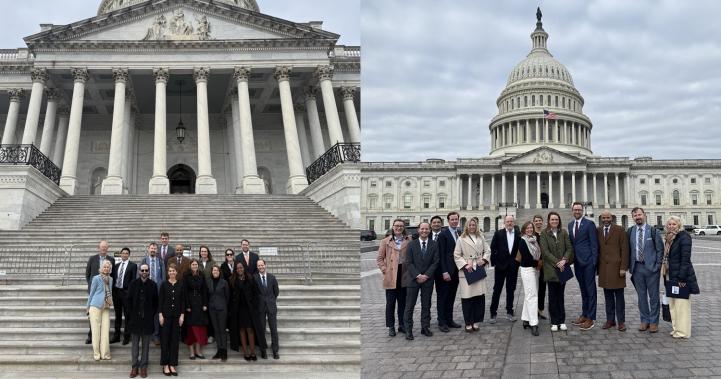
ACI, the trade association for the cleaning product supply chain, led a coalition of 26 attendees representing 15 member companies in a Congressional fly-in to share with members of the House Energy and Commerce and Senate Environment and Public Works Committees the real-world impact of challenges imposed by the current TSCA statute. Companies across the cleaning products industry are experiencing bottleneck reviews of new chemicals, leading to delays in getting safer, more sustainable chemistries and products to market.
“ACI and its member companies want to see targeted, bipartisan refinements that preserve TSCA’s strong health protections, while promoting science-based decisions and a system that encourages safer innovation rather than delaying it,” said Blake Nanney, ACI’s Director of Government Affairs.
ACI advocates met with 15 Congressional offices, highlighting how specific areas where proposed bills by both the U.S. House of Representatives and the U.S. Senate would streamline new chemistry review under the Environmental Protection Agency (EPA):
- Focus evaluations on credible risks – prioritize exposure pathways that are more likely than not to occur, so EPA resources target the highest-risk situations.
- Clarify “conditions of use” – ensure reviews reflect intended and credibly foreseeable uses and appropriately recognize effective exposure controls that protect workers and communities.
- Create priority review pathways for safer substitutes and Safer Choice-aligned chemistries – accelerate review for innovations that demonstrably reduce hazard/exposure compared with legacy substances.
- Strengthen risk management by emphasizing measures that reduce risk to the extent reasonably feasible – drive real-world protections while minimizing unintended consequences.
- Allow appropriate treatment of chemically equivalent substances – avoid duplicative reviews where EPA has already assessed equivalent substances, while preserving EPA oversight.
- Reinforce coordination and scientific rigor – improve predictability through clearer timelines, earlier engagement, stronger interagency coordination, and fit-for-purpose peer review.
The American Cleaning Institute® (ACI – www.cleaninginstitute.org) is the Home of the U.S. Cleaning Products Industry® and represents the $60 billion U.S. cleaning product supply chain. ACI members include the manufacturers and formulators of soaps, detergents, and general cleaning products used in household, commercial, industrial and institutional settings; companies that supply ingredients and finished packaging for these products; and chemical distributors. ACI serves the growth and innovation of the U.S. cleaning products industry by advancing the health and quality of life of people and protecting our planet. ACI achieves this through a continuous commitment to sound science and being a credible voice for the cleaning products industry.